








A black shirt pulled over your head should not turn into a lint-roller emergency. Learning how to prevent deodorant clothing transfer comes down to a few small habits: using the right amount, giving it a moment to settle, and choosing an application method that suits your routine. These details can make an aluminum-free deodorant feel just as easy to wear as the rest of your daily essentials.
Why deodorant transfers to clothing
Most transfer happens when deodorant sits on the surface of the underarm rather than settling onto the skin. A thick layer can catch on fabric as you pull on a fitted tee, blouse, or dress. This is especially common with dark colors, close-fitting sleeves, and fabrics that move closely against the body.
Heat and movement can add to the issue. If you apply deodorant immediately after a hot shower, workout, or quick walk with the dog, the underarm area may still be warm or damp. Putting on clothing before the area feels dry can make product more likely to rub onto the fabric.
The goal is not to use less deodorant than you need. It is to use a light, even layer that is comfortable for your day, then allow a brief pause before getting dressed.
How to prevent deodorant clothing transfer at application
Start with clean, dry underarms. Towel off thoroughly after bathing, and if you are applying deodorant after exercise, take a moment to cool down first. Applying to dry skin helps the product stay where you intended it to go.
With a stick deodorant, use a few gentle swipes rather than pressing hard or building up several passes. You should feel a smooth layer, not see a heavy coating. If the stick has been stored somewhere very warm, a lighter hand is particularly helpful.
Cream deodorant offers more control because you decide how much to apply. Begin with a small amount, warm it between your fingertips, and spread it evenly across the underarm. More is not automatically better. A thin, well-distributed layer is usually more comfortable and less likely to meet your sleeve before it has settled.
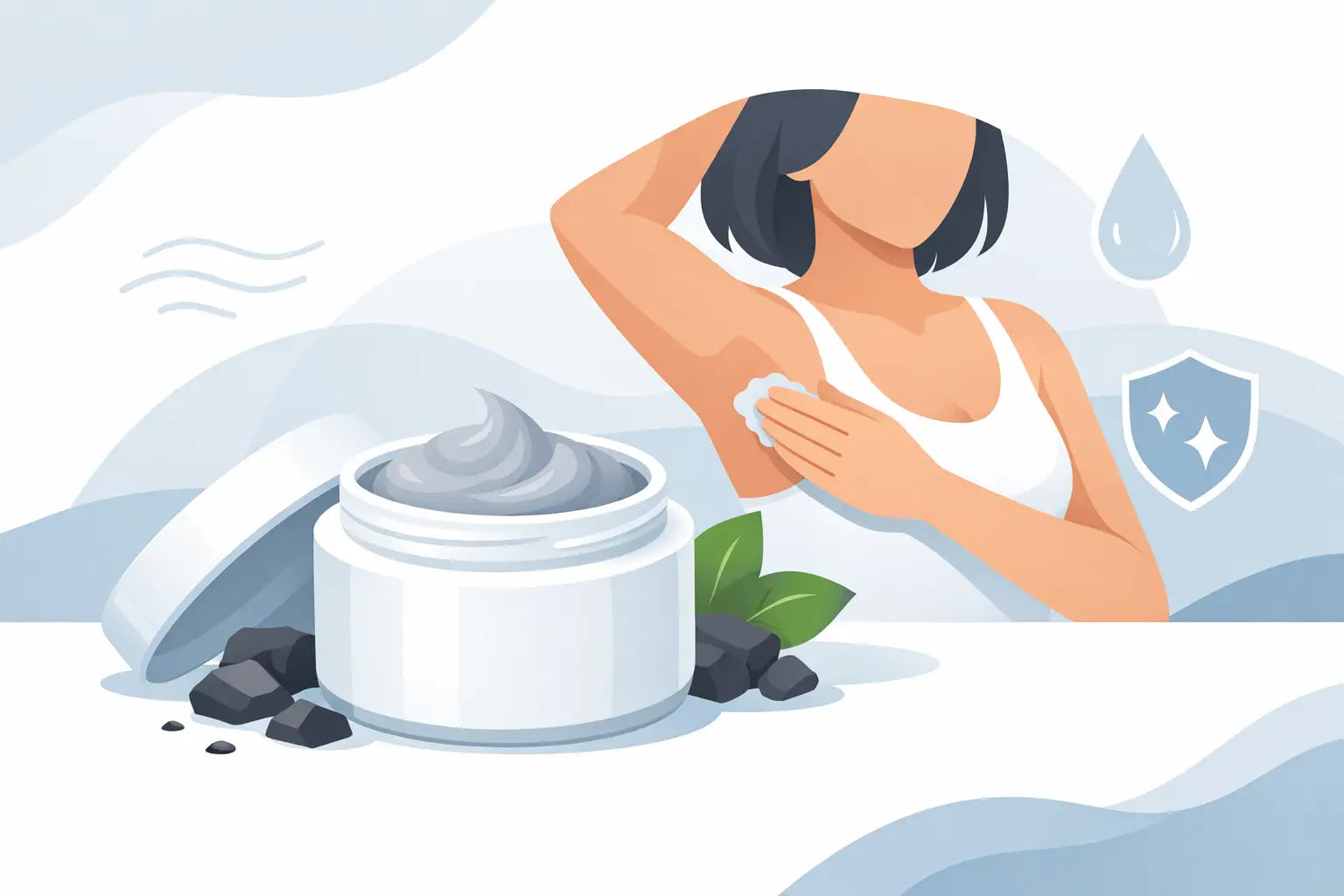
Charcoal cream deodorant can be applied with the same light-touch approach. Take a small amount, smooth it over dry skin, and wash your hands after application. This keeps any remaining product from transferring to the waistband, collar, or front of the garment you are about to put on.
Give it a brief moment before dressing
You do not need to add a complicated waiting period to your morning. Thirty seconds to a couple of minutes is often enough time to brush your teeth, choose earrings, refill a water bottle, or gather what you need for the day.
During that pause, keep your arms relaxed rather than immediately pulling on a snug top. If you can feel excess product sitting on the skin, gently blend it in with clean fingertips before dressing. This simple step is one of the most reliable ways to keep deodorant off your clothes.
Dress in a way that protects your favorite pieces
The way you put on a garment matters almost as much as application. For shirts, dresses, and sweaters that go over the head, widen the neck opening with both hands and guide the fabric over your face before lowering it around the shoulders. Avoid dragging the inside of the garment directly across the underarms.
For a fitted top, try putting one arm in at a time and keeping the fabric away from the underarm area until the garment is in place. Button-down shirts and open-front layers naturally reduce contact during dressing, which can be useful on busy mornings when you are short on time.
Fabric choice can also play a role. Smooth, slightly roomier sleeves tend to glide more easily than very tight knits. That does not mean you need to give up your favorite close-fitting clothes. It simply means a short settling time and careful dressing are more worthwhile when the fabric sits close to the body.
If you are changing outfits after applying deodorant, such as before an evening event or after the gym, take the same approach. Do not assume the morning application is fully invisible just because several hours have passed. Fresh friction from changing clothes can still leave a mark, particularly on dark fabrics.
Choose a format that works with your routine
The best deodorant format is the one you can apply consistently and comfortably. A stick can be a practical choice for quick, no-fuss mornings. Cream deodorant may suit someone who prefers to control the amount and blend it in with their fingertips. Charcoal cream deodorant offers another cream-format option in Unscented, Lavender, and Citrus.
Scent is personal, but it can influence how you experience your routine. Purelygreat stick deodorants are available in Unscented, Lavender, Tea Tree, Floral, and Spice. Cream deodorants come in Unscented, Citrus, Lavender, Floral, Patchouli, and Spice. Choosing a scent you genuinely enjoy can make it easier to slow down for the few seconds that help prevent transfer.
Unscented is a straightforward choice when you prefer your deodorant to stay in the background of your fragrance routine. Citrus can feel bright and fresh, while Lavender, Floral, Patchouli, Spice, and Tea Tree each offer a more distinct daily ritual. The format and scent do not need to be permanent decisions. Your workdays, travel plans, and seasonal wardrobe may call for different options.
What to do if you see a mark anyway
Even careful routines have rushed moments. If you notice deodorant on clothing before leaving home, avoid rubbing the mark deeper into the fabric. Start by gently lifting away surface residue with a clean, dry cloth or a soft fabric brush.
For a small fresh mark on a dark garment, lightly rub the fabric against itself from the inside, using the clean section of the garment to pick up residue. Work gently and check your progress often. Aggressive rubbing can create a shiny patch or stretch delicate material.
If the garment needs washing, follow its care label. Treating a visible area before laundering can be helpful, but keep the treatment appropriate for the fabric. Delicate materials, dry-clean-only pieces, and richly dyed garments deserve extra care. When in doubt, test any cleaning approach in an inconspicuous spot first.
Avoid putting a garment through high heat if a visible mark remains after washing. Heat can make many types of residue more difficult to remove. Let the fabric air-dry, inspect it in good light, and repeat a gentle cleaning step if needed.
Build a low-transfer routine for busy days
The most practical routine is also the easiest to repeat. Apply deodorant to dry underarms, use a light and even layer, wash your hands after cream application, and give the product a brief moment before getting dressed. Then pull on clothing with a little space between fabric and skin.
Keep an extra moment in your schedule for outfits that are black, fitted, sleeveless, or made from delicate fabric. Those are not clothes to avoid. They simply benefit from a more deliberate application and dressing routine.
Purelygreat offers effective aluminum-free natural deodorant in stick, cream, and charcoal cream formats, so you can choose the application style that fits your day. A small adjustment in how you apply and dress can keep your clothes looking fresh while your daily care routine stays simple.